You’ve heard of donor fatigue. It’s one of the most talked-about challenges in the nonprofit world—the idea that donors are so overwhelmed by appeals that they’ve simply stopped responding.
But what if fatigue isn’t really the root problem? What if something deeper is going on?
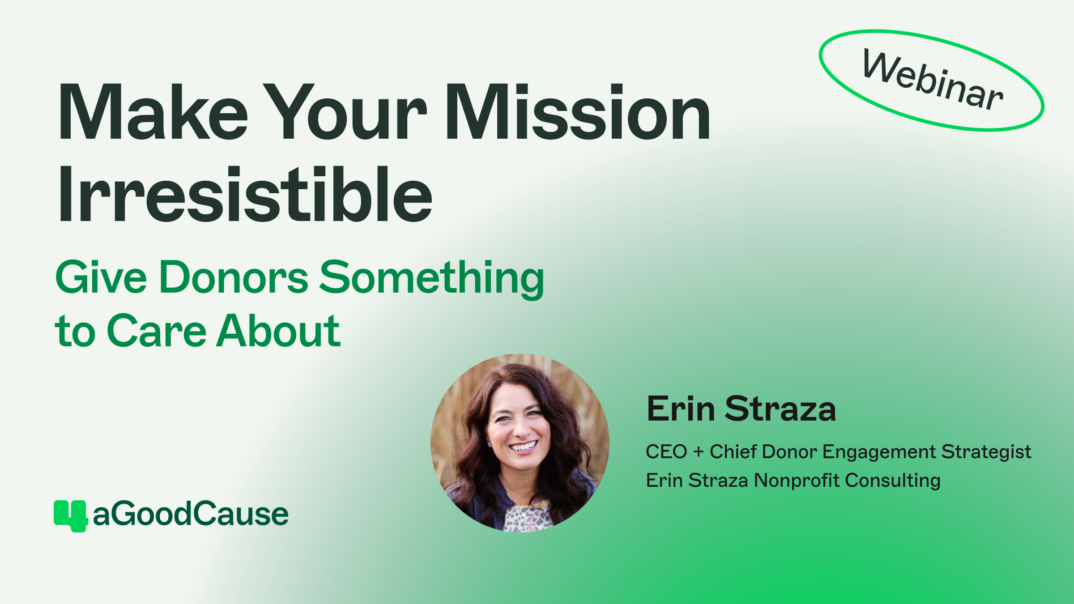
That’s the question nonprofit messaging strategist Erin Straza explored in a recent webinar with 4aGoodCause’s Ronald Pruitt. And her answer reframes how small nonprofits should think about their donor communication entirely.
Watch the full video
In this session, Erin introduced the concept of mission indifference—and shared a practical, story-driven framework for turning apathetic donors into committed, passionate champions who give year after year.
Whether your donor response rates have been slipping or you simply want to sharpen your messaging strategy, this one is worth your time.
In this session, you’ll explore:
- Why donor apathy (not donor fatigue) is the real root cause of declining donor engagement
- The “change equation” framework: how to position your donors as essential mission partners, not just observers
- What a case for support narrative is, why your team needs one, and how to build it
- How to combat apathetic donors through consistent, multi-channel storytelling
- Practical strategies for converting first-time donors into recurring monthly supporters
6 top takeaways from the webinar
1. Donor fatigue is a symptom—donor apathy is the root cause
Erin drew an important distinction early in the session: donor fatigue (the wilting plant, so to speak) is what we see on the surface. But the real problem underneath is donor apathy—the inability to summon care in the moment.
Donors aren’t bad people. They’re just busy people with a long list of things competing for their attention on any given day. Your nonprofit may be something they genuinely care about—but unless you give them a compelling reason to act right now, your cause will stay near the bottom of that list.
2. Donors want to make a difference—you just have to show them how
One of the most reassuring data points Erin shared: 97% of donors say that impact is their top reason for giving. That means if your messaging consistently connects the donor’s gift to a tangible outcome, you’re speaking to nearly every person in your audience.
The key is framing. Too many nonprofits communicate in a way that centers the organization’s work—and accidentally leaves the donor off to the side.
Donors hear: “We’re doing all this. Can you help?” What they need to hear is: “Together, we’re creating this change. You’re essential to it.”
🤯 Did you know? Monthly giving programs free your team up to do what matters most: further the mission and share the impact. When you give donors an ongoing role through recurring support, they become long-term partners—not one-time bystanders. Find out how to start a monthly giving program so you can raise more and stress less.
3. The change equation: your org + donor support = world change
Erin introduced what she calls the “change equation:” your organization’s work plus donor partnership equals real-world outcomes.
Both sides are required. When nonprofits leave the donor out of that equation in their messaging, even subtly, it erodes donor motivation.
The fix is to spotlight partner support in every communication. Make it clear that without the donor’s involvement, the work doesn’t happen—and when they do engage, the impact is specific and real.
4. Build a “case for support” narrative—and use it for everything
A “case for support” narrative is an internal document—not a brochure, not a one-pager—that tells your full mission story from the donor’s perspective. Think of it as your messaging guideline, the same way a brand guide governs your visual design.
The narrative has four chapters:
- The crisis: What’s broken in the world that your organization exists to address
- The solution: Your programs, expertise, and theory of change
- The donor’s opportunity: What happens when the donor joins the mission
- The outcomes: The specific, tangible impact that donor partnership creates
Once built, this document feeds every communication your team creates—emails, social posts, website copy, annual reports, and appeals—without starting from scratch each time.
5. Repetition isn’t the enemy—it’s the strategy
One of the most validating points for overwhelmed nonprofit communicators: your donors are not hearing everything you send them. Board members who’ve been around for 18 months still don’t fully understand what the organization does. Repetition isn’t annoying donors—it’s helping them catch up.
Erin recommends wrapping a fresh creative theme around your case for support each year so your messaging feels current without abandoning the foundational story.
6. First-time donors need a follow-up plan
Only about 14% of first-time donors give a second gift. That’s a sobering number—but it’s also a massive opportunity. Erin recommends a personal phone call to every first-time donor, followed by a welcome series that orients them to the mission and community, not just to the organization.
Ronald added an important layer here: The best time to convert a first-time donor to a monthly recurring gift is within the first 30 days, when their connection to your cause is fresh and their excitement is highest.
⭐️ What if there’s an easier way to maximize donations? There is. It’s called recurring monthly giving, and it generates 2.4x more revenue on average than one-time gifts. And our Monthly Giving Toolkit simplifies the whole program.
What’s the difference between donor fatigue and donor apathy—and why does it matter?
This distinction matters a lot for how you approach your messaging strategy. Donor fatigue assumes the problem is external—too many nonprofits asking too many donors for too much money. And if that’s the problem, you’re somewhat helpless to fix it.
Donor apathy is something you can actually address. It’s the natural result of a busy life and a crowded attention span. On any given day, your donors may have 20 things more pressing than your mission. That doesn’t mean they don’t care—it means they haven’t been given a compelling enough reason to act right now.
Strategic, consistent, donor-centered messaging is what changes that. When donors see themselves reflected in your communications—as essential partners in a mission they believe in—they’re more likely to move your organization up their list of priorities. And over time, they’re more likely to become the kind of recurring, loyal donors that sustain your work.
Supplemental resources mentioned in this session
Missed the invitation for the live session
💌 Subscribe to the 4aGC newsletter so you don’t miss the next one. We host regular webinars and office hours sessions designed specifically for small nonprofits looking to raise more with less stress.
If you’re not ready for a demo—but would love to see more real stories of nonprofit successes and unique, tested fundraising tips—the newsletter is a great place to start.
About the expert
Erin Straza specializes in helping nonprofit teams craft engagement and messaging strategies that make their mission irresistible to donors. She works with organizations on strategic messaging, seasonal and capital campaigns, donor journey development, and communications planning—with results that translate into real budgetary growth and greater mission impact.
Connect with Erin: erinstraza.com | LinkedIn | Substack